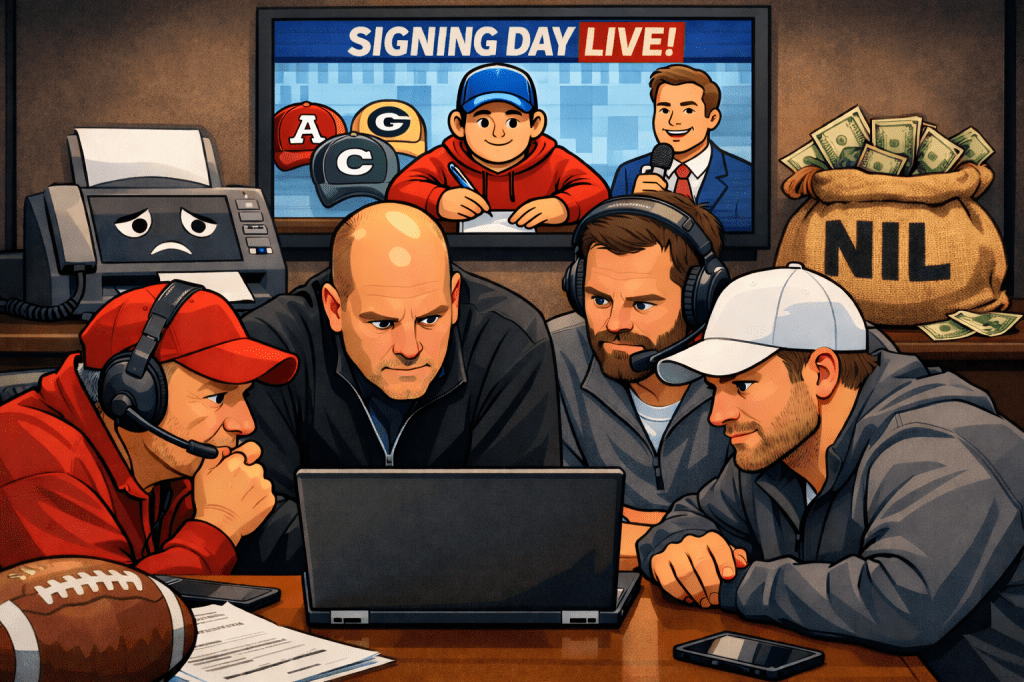
For decades, “National Signing Day” meant one thing in college football: the first Wednesday in February, the day a prospect’s decision finally became official. It was the sport’s annual deadline drama, built around a binding document that locked in both sides and brought order to a recruiting process that used to run on handshakes and hard feelings.
The document that made Signing Day matter
The modern ritual traces back to 1964 with the creation of the National Letter of Intent, a standardized agreement designed to protect schools and prospects by turning a verbal commitment into a formal, enforceable one. The concept was simple: the athlete commits to attend for at least a year in exchange for athletics aid, and other schools agree to stop recruiting that signed player. That structure became the backbone of Signing Day culture for generations.
The fax machine era and the birth of the “Signing Day show”
As TV coverage of recruiting grew, Signing Day became a live event. Coaching staffs camped out waiting on signed paperwork, and the “fax it in” moment became its own piece of theater. Media coverage leaned into the tension: who is in, who is late, who is flipping, who is stalling. Even as technology advanced, the sport kept the ritual because it created a single, shared moment when fans could follow roster-building in real time.
How the calendar changed everything: December arrives
The biggest structural change came in 2017 when college football added an early signing period in December. The first early window ran December 20–22, 2017, giving recruits a way to sign before February and giving programs a way to secure commitments sooner. Overnight, February stopped being the finish line for the majority of classes and became more of a clean-up window for the remaining spots.
Why December took over so quickly
Once December signings started, the incentives were obvious. Recruits could end the spotlight and start planning the next phase of their lives. Programs could reduce uncertainty, manage numbers earlier, and protect themselves against late-cycle chaos. February still mattered, but mostly for late bloomers, coaching changes, academic timing, and the handful of high-profile decisions that waited out the early window.
The transfer portal changed what recruiting means
Then roster building got a second front. The NCAA transfer portal system launched as a compliance tool on October 15, 2018, and it accelerated a new reality: recruiting was no longer only about high school seniors. It became year-round roster management that included current college players moving school-to-school on shorter timelines. Signing Day did not disappear, but it had to share oxygen with portal windows, immediate needs, and constant re-recruitment of players already on campus.
A new paperwork reality: Division I moves beyond the NLI
In October 2024, the NCAA Division I Council eliminated the National Letter of Intent program for Division I, shifting the “binding” function to written financial aid agreements that preserve many of the same core effects. Practically, most fans still experience it as “Signing Day,” but under the hood, the mechanism changed. The sport kept the moment while updating the legal and administrative framework around it.
What National Signing Day is now
Today, Signing Day is less of a single annual climax and more of a chapter in a longer roster story. December is the primary signing moment for most high school recruits. February is a second pass for programs finishing the class. Around both dates sits the transfer portal cycle, which can reshape depth charts as much as any high school haul. The event still matters because it is the cleanest way to tell the story of a class, introduce new names, and put official language around commitments, even as the sport’s real roster churn keeps moving long after the hats are put away.
 GORESPORTS.net
Leave a comment