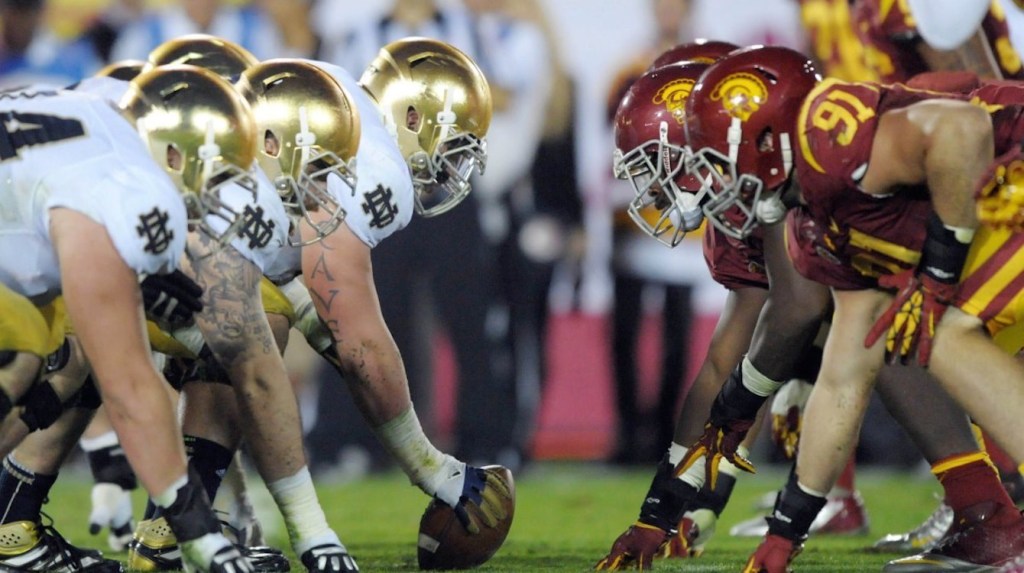
This is one of those stories where everyone hides behind polite language, says the right things, and pretends nobody quit.
But let’s be honest about what actually happened.
Notre Dame and USC are not playing football next season. The Jeweled Shillelagh is headed to storage after 2025. Not because the rivalry lost meaning. Not because Notre Dame walked away.
It’s because USC did, with a push from a playoff system that rewards fear and punishes risk.
The Simple Truth
Notre Dame wanted to keep the rivalry exactly as it has existed for generations.
USC wanted to change it.
When Notre Dame said no, USC chose to leave.
That is quitting, no matter how many press releases try to dress it up.
What USC Is Really Doing
USC’s move to the Big Ten changed everything.
Long travel. A nine-game conference grind. Suddenly, the annual late-season trip to South Bend doesn’t look like tradition anymore. It looks like danger.
And instead of embracing that challenge, USC decided the rivalry was only worth keeping if it became safer.
Their argument is simple… lose early, and the playoff committee might forgive you. Lose late, and you’re done.
The problem? Nobody actually knows how the committee thinks anymore.
That uncertainty has scared USC into trying to game the system. They want Notre Dame in September, when a loss can be shrugged off, reframed, or conveniently forgotten.
Notre Dame refused to be part of that.
USC didn’t like hearing no.
So they walked.
Notre Dame’s Position Was Not Complicated
Notre Dame wasn’t asking for special treatment.
They weren’t changing venues. They weren’t demanding home-heavy stretches. They weren’t afraid of competition. They wanted the USC game where it has always been, late October in South Bend, Thanksgiving weekend in Los Angeles.
That timing isn’t nostalgia for nostalgia’s sake. It’s part of Notre Dame’s independence. It’s part of its national relevance late in the season. It’s part of the NBC relationship. It’s part of what makes Notre Dame different.
Move USC to September, and you don’t just change a date, you change the entire identity of the schedule.
Notre Dame chose tradition over optimization.
USC chose optimization over tradition.
Only one of those choices killed the rivalry.
The Playoff Committee Is the Real Villain
This doesn’t happen without the College Football Playoff Invitational committee turning selection into guesswork.
Notre Dame fans just lived it.
A 10-2 Notre Dame team finished No. 11 and were the first team out, in a year when nobody could clearly explain why certain losses mattered more than others. The criteria felt flexible. The explanations felt hollow.
That frustration boiled over. The AD called it out. The players opted out of the bowl.
And suddenly, everyone learned the lesson the sport is now teaching: If the committee is unpredictable, you minimize risk. If tradition increases risk, tradition becomes expendable.
USC just learned that lesson faster and acted on it sooner.
This One Hurts Because It Was Optional
This rivalry has paused before.
War stopped it. A pandemic stopped it.
This time? Nothing stopped it except fear of the math.
USC wasn’t forced out. USC wasn’t boxed in. USC didn’t run out of dates. They ran out of appetite.
What Comes Next
Notre Dame replaced USC with BYU. USC replaced Notre Dame with flexibility.
Both sides say the rivalry will return. Maybe 2030. Maybe later. Maybe never. In today’s college football, promises are cheap and calendars change fast.
For now, the Shillelagh stays in South Bend… where it’s been for three straight years.
Not because it stopped mattering. But because one side decided it mattered less than protecting a resume from a committee nobody understands.
And that’s the part Notre Dame fans won’t forget.
 GORESPORTS.net
Leave a comment