You start a Saturday thinking about the game itself, the hits, the rivalries, the last‑minute drives. But then you notice the cameras, the TV banners, and the constant mentions of network deals. You hear about a coach’s salary, a stadium renovation, a transfer portal move, or a new conference alignment, and it hits you.
College football isn’t just a sport anymore. It’s a business, and everything we cheer for exists inside that reality.
Every decision in college football has a price tag. Conferences expand, schools move, and schedules shift because of money, not nostalgia. Coaches are paid like CEOs because wins bring revenue. Ticket sales, TV ratings, merchandise, and donations all go up when programs win, and the people running the programs know it.
Players are part of the business too.
Transfers are more common than ever. Athletes move from program to program to find better opportunities, more exposure, or bigger NIL deals. A star quarterback or wide receiver can lift an entire program just by being on the field, and now they can also bring sponsors, social media attention, and money to wherever they land. Recruiting isn’t just about talent anymore. It’s about business potential, brand value, and what the player brings beyond the field.
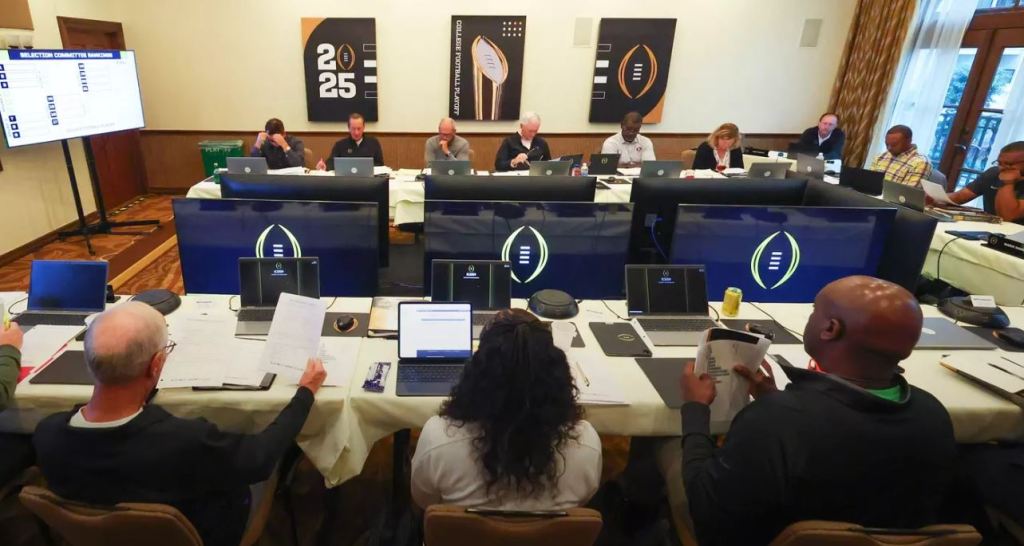
The business side of the sport becomes even clearer when you look at how teams are selected for the College Football Playoff Invitational. The CFI is not just a postseason bracket. It is one of the most valuable properties in American sports, backed by an exclusive worldwide broadcast deal with ESPN that runs through at least the 2031‑32 season. Under that agreement, ESPN holds exclusive rights to broadcast every round of the playoff and related programming, including the CFI selection show and weekly Top 25 rankings. That contract alone is worth billions of dollars and cements ESPN as the dominant media partner for the sport’s biggest event.
That level of investment creates incentives.
Networks want compelling matchups that draw the biggest audiences. When ESPN has paid so much to control the playoff broadcast and the narrative around it, there is an obvious commercial interest in showcasing teams and conferences that regularly generate high TV ratings. The major conferences with the richest media deals tend to fill most playoff spots. That recurring pattern is not just about on‑field performance. It reflects where the money is and who controls it.
This dynamic helps explain why independent programs like Notre Dame and teams whose primary rights are not on ESPN, such as BYU, can be perceived as disadvantaged in CFI discussions.
Notre Dame’s regular season TV rights are tied to NBC, and BYU’s games are broadcast on Fox. Those networks are not the holder of the playoff rights, so their regular broadcast exposure does not feed directly into the CFI media ecosystem dominated by ESPN platforms. Because ESPN does not have control over Notre Dame’s or BYU’s regular season broadcasts, those programs do not generate the same integrated revenue stream for ESPN as teams whose games are regularly shown on ESPN or its affiliated networks. That reality feeds a broader perception that the network’s commercial interests influence how narratives around playoff resumes are constructed and which teams are most prominently featured on TV.
Critics, including media analysts from rival networks, have openly suggested that the CFI selection process favors teams with the biggest media draws and the closest alignment with the broadcast partner that owns the playoff rights, Disney aka ESPN. Some argue that committee rankings and national discussion tend to elevate certain schools and conferences that drive viewership for the network airing the games, whether intentionally or not, in return making their value go up and creating more money for those that own the rights to the conference, Disney aka ESPN.
That is not to say the selection committee ignores records, strength of schedule, or results. Those factors matter every year. But the broader media ecosystem, and the money tied to it, inevitably shapes which teams are talked about most, which narratives get the most airtime, and which matchups are marketed as must‑watch television. When ESPN is underwriting the playoff’s entire broadcast and promotional apparatus, that ecosystem has real commercial influence on college football’s biggest stage.
Fans often get frustrated by moves that feel unfair or confusing. Why leave a conference that has history? Why schedule a major rivalry on a random Thursday night? Why fire a coach after one bad season? Why does a player leave a team that seemed perfect for them? And why do we see the same conferences and programs in the playoff year after year? The answer … follow the money. Understanding that reality makes all those decisions make sense.
But make no mistake, the magic of college football still exists. The rivalries, the upsets, the moments that make you jump off the couch, they are still there. They just happen inside a framework of commerce, contracts, transfers, and careful calculations.
Once you see the sport this way, you start understanding why it looks the way it does today. You start understanding the stakes beyond the scoreboard. And you start seeing college football not just as a Saturday ritual, but as one of the biggest and most unique businesses in America.
Today’s upload to the GoreSports YouTube Channel:
 GORESPORTS.net
Leave a comment