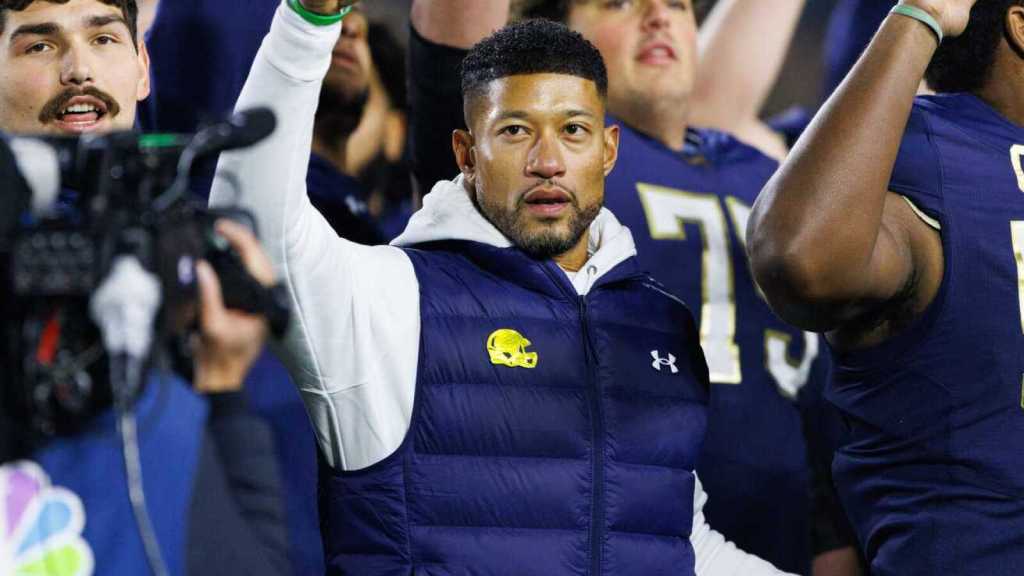
The reaction was immediate and intense when Notre Dame turned down a bowl this season.
Loud-mouthed talking heads forget, the program has a long history of selective postseason participation. For nearly half a century, Notre Dame did not take part in bowl games at all. Later, it approached bowls with caution and purpose rather than routine acceptance.
Notre Dame first appeared in a bowl in the 1925 Rose Bowl, where the Irish defeated Stanford 27 to 10.
After that single trip, the university stayed out of bowl games for more than forty years. From 1925 through the late 1960s, Notre Dame maintained a university policy prohibiting postseason play. The reasoning reflected the institution’s view that bowl games were commercial exhibitions that conflicted with academic priorities.
During this time, many of the program’s most storied teams finished their seasons in late November. National championships were determined by final polls at the conclusion of the regular season, so Notre Dame did not feel compelled to pursue bowl participation in order to claim national titles.
In 1969, after decades of debate on campus and growing pressure from the evolving college football landscape, Notre Dame lifted its ban on bowl appearances.
The result was an invitation to the Cotton Bowl Classic on January 1, 1970. The Irish faced top ranked Texas and lost 21 to 17. Although the outcome was disappointing for Notre Dame fans, the trip marked a significant turning point. For the first time in more than forty years, the Irish were part of the postseason conversation.
The Cotton Bowl appearance did not immediately convert Notre Dame into a frequent bowl participant. During the 1970s the athletic department remained selective, choosing only the most prominent opportunities. Still, the wall that had kept Notre Dame out of postseason play for generations had finally come down.
By the early 1980s, changes within college football were reshaping the bowl landscape. Increased television coverage, expanded postseason slots, and rising financial incentives shifted the national environment. Recruiting expectations also grew, and postseason appearances became a competitive metric.
Notre Dame’s participation gradually became consistent.
Under Lou Holtz, the Irish used bowl games to cement national relevance. The 1988 national championship season reinforced the idea that major postseason stages were essential for pursuing top rankings. Through the Bowl Coalition, the Bowl Alliance, the BCS era, and ultimately the College Football Playoff era, Notre Dame integrated fully into the structure of postseason football.
During this period the Irish appeared in major bowls at a regular pace and occasionally declined opportunities that the institution or coaching staff viewed as misaligned with the program’s standards or strategic goals. A notable example occurred after the 1996 season when Notre Dame declined a bowl bid following Lou Holtz’s resignation.
When viewed within the full history of the program, a decision to skip a bowl game in the present day is not a break from tradition. It is a brief reminder of an older identity in which Notre Dame determined its own postseason path rather than allowing expectations within the broader sport to dictate every decision.
Bowl-Game History
| Season | Bowl / Postseason Game | Opponent | Result / Notes |
|---|---|---|---|
| 1924 | 1925 Rose Bowl | Stanford | Win, 27–10 |
| 1925–1968 | No bowl appearances (self-imposed) | — | No postseason games despite often strong seasons. |
| 1969 | 1970 Cotton Bowl | Texas | Loss, 21-17 |
| 1970 | 1971 Cotton Bowl | Texas | Win, 24–11 |
| 1972 | 1973 Orange Bowl | Nebraska | Loss, 40-6 |
| 1973 | 1973 Sugar Bowl | Alabama | Win, 24–23 |
| 1974 | 1975 Orange Bowl | Alabama | Win, 13–11 |
| 1976 | 1976 Gator Bowl | Penn State | Win, 20–9 |
| 1977 | 1978 Cotton Bowl | Texas | Win, 38–10 |
| 1978 | 1979 Cotton Bowl | Houston | Win, 35–34 |
| 1980 | 1981 Sugar Bowl | Georgia | Loss, 17-10 |
| 1983 | 1983 Liberty Bowl | Boston College | Win, 19–18 |
| 1984 | 1984 Aloha Bowl | SMU | Loss, 27-20 |
| 1988 | 1988 Cotton Bowl | Texas A&M | Loss, 35-10 |
| 1989 | 1989 Fiesta Bowl | West Virginia | Win, 34–21 |
| 1990 | 1990 Orange Bowl | Colorado | Win, 21–6 |
| 1991 | 1991 Orange Bowl | Colorado | Loss, 10-9 |
| 1992 | 1992 Sugar Bowl | Florida | Win, 39–28 |
| 1993 | 1993 Cotton Bowl | Texas A&M | Win, 28–3 |
| 1994 | 1994 Cotton Bowl | Texas A&M | Win, 24–21 |
| 1995 | 1995 Fiesta Bowl | Colorado | Loss, 41-24 |
| 1996 | 1996 Orange Bowl | Florida State | Loss, 31-26 |
| 1997 | 1997 Independence Bowl | LSU | Loss, 27-9 |
| 1999 | 1999 Gator Bowl | Georgia Tech | Loss, 35-28 |
| 2001 | 2001 Fiesta Bowl | Oregon State | Loss, 41-9 |
| 2003 | 2003 Gator Bowl | NC State | Loss, 28-6 |
| 2004 | 2004 Insight Bowl | Oregon State | Loss, 38-21 |
| 2005 | 2006 Fiesta Bowl | Ohio State | Loss, 34-20 |
| 2006 | 2007 Sugar Bowl | LSU | Loss, 41-14 |
| 2008 | 2008 Hawaii Bowl | Hawaii | Win, 49–21 |
| 2010 | 2010 Sun Bowl | Miami (FL) | Win, 33–17 |
| 2011 | 2011 Champs Sports Bowl | Florida State | Loss, 18-14 |
| 2013 | 2013 Pinstripe Bowl | Rutgers | Win, 29–16 |
| 2014* | 2014 Music City Bowl | LSU | Win, 31–28 |
| 2015* | 2016 Fiesta Bowl | Ohio State | Loss, 44-28 |
| 2017* | 2018 Citrus Bowl | LSU | Win, 21–17 |
| 2018* | 2018 Cotton Bowl Classic (CFP semifinal) | Clemson | Loss, 30-3 |
| 2019* | 2019 Camping World Bowl | Iowa State | Win, 33–9 |
| 2020 | 2021 Rose Bowl (CFP semifinal) | Alabama | Loss, 31-14 |
| 2021 | 2022 Fiesta Bowl | Oklahoma State | Loss, 37-35 |
| 2022 | 2022 Gator Bowl | South Carolina | Win, 45–38 |
| 2023 | 2023 Sun Bowl | Oregon State | Win, 40-8 |
| 2024* | CFP First Round | Indiana | Win, 27-17 |
| 2025* | 2025 Sugar Bowl (CFP Quarterfinals) | Georgia | Win, 23-10 |
| 2025 | 2025 Orange Bowl (CFP Semifinals) | Penn State | Win, 27-24 |
| 2025 | 2025 National Championship | Ohio State | Loss, 34-23 |
* denotes games I attended.
 GORESPORTS.net
Leave a comment