College football has lost its balance.
Nine head coaches have already been fired before mid-October. The buyout total sits above 116 million dollars. Another 93 million was handed to one coach just to make sure he stayed.
The sport has turned into a marketplace where failure and fear are both rewarded.
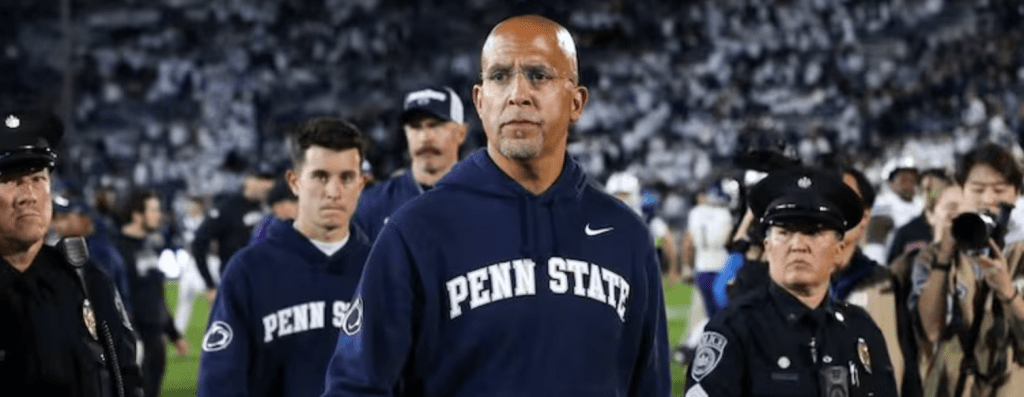
James Franklin was fired at Penn State after a 3–3 start. His buyout will cost between 49 and 56.6 million dollars. Florida fired Billy Napier a week later and owes him 21.7 million. The deal he signed had no offset clause. Even if he takes another job, Florida still pays the full amount. The school is also still paying Dan Mullen 12 million from his own buyout. Together that is more than 33 million dollars for two coaches no longer working there.
Mike Gundy’s exit from Oklahoma State cost 15 million.
Sam Pittman’s from Arkansas was 9.8 million.
DeShaun Foster’s firing at UCLA cost 6.43 million.
Brent Pry at Virginia Tech, 6 million.
Trent Bray at Oregon State, 4 million.
Trent Dilfer at UAB, 2.4 million.
Jay Norvell at Colorado State, 1.5 million.
Every one of those payouts came from university budgets that also rely on the fans’ pockets.
At the same time, Indiana gave Curt Cignetti an eight-year, 93 million dollar extension. Fully guaranteed. The school acted quickly to keep him from being courted by Penn State after Franklin’s firing. Indiana was not paying for success. It was paying to avoid fear.
This is the new economy of college football.
Coaches are guaranteed riches whether they win or lose. Athletic departments are taking on enormous financial risk, knowing that fans and students will absorb it through higher costs. Ticket prices rise. Donation tiers expand. The bills are passed to the people who fill the seats and watch the broadcasts.
Administrators claim these deals are the price of competing in the College Football Playoff era. In truth, they are the price of impatience. Programs once allowed coaches to build. Now they panic after a few losses. Buyouts that once served as protection are now treated like weapons.
Universities have a duty to manage money responsibly. Yet basic safeguards like offset clauses or performance-based guarantees are often ignored. Florida’s handling of Napier’s contract is not an isolated error. It is part of a larger pattern of carelessness that repeats itself every fall.
Fans keep hearing that schools cannot afford to pay athletes more, or that budgets are too tight to add scholarships in non-revenue sports. But when it comes time to replace a coach, millions appear overnight.
That contradiction reveals where priorities truly lie.
There are ways to slow the cycle. Contracts could require offsets to prevent double payments. Buyouts could scale with results instead of staying fully guaranteed. Trustees could demand financial reviews before new deals are approved. These are not radical ideas. They are basic steps toward accountability.
Until that happens, the sport will keep feeding the same cycle. A coach is fired. Another is hired for more money. The next contract grows larger. The same fans who celebrate the press conference end up paying the hidden cost.
College football has always been emotional. It is built on loyalty and pride. But the numbers now speak louder than the traditions. The game on the field still matters. Yet off the field, the real competition has become who can spend the fastest.
And in that race, it is the fans who keep footing the bill.
 GORESPORTS.net
Leave a comment