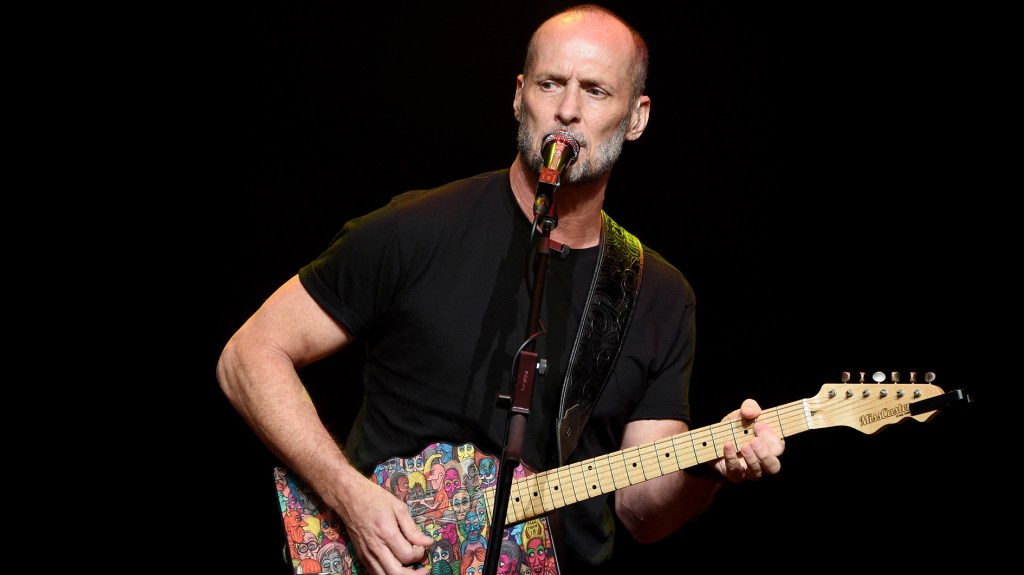
Some guys follow a script.
Paul Thorn writes his own.
He once stood in a ring in Atlantic City. His opponent was Roberto Durán, the legend with hands of stone. Today, he stands on stage with a guitar. He sings songs about life, sin, and salvation. His voice is gravel and honey. He is a fighter. He is a poet. He is the real deal.
Thorn’s life wasn’t easy. He’s been a professional boxer, a skydiver, and a factory worker. Every job taught him something. Every fight gave him a story. His best lessons came from two men. One was his father, a Pentecostal preacher. The other was his uncle, a pimp. This mix of light and dark made him the man he is. It’s the soul of his music.
Before the music, there was boxing. Thorn’s hands were wrapped in leather, not wrapped around a guitar. His boxing career was pure Mississippi grit. He learned to fight in his Tupelo backyard. His trainer was his uncle Merle, a former boxer and pimp. There were no fancy gyms. Thorn trained with a heavy bag hanging from a tree. For real sparring, they drove to Memphis.
He cut his teeth as an amateur, winning Golden Gloves tournaments. His toughest test came at 16. He fought in a tournament inside the Mississippi State Penitentiary, known as Parchment Farm. He was the only fighter on the 20-fight card who wasn’t an inmate. He fought twice that day, once in the first bout and again in the last. He won both. He still has the trophies.
He turned pro and fought from 1985 to 1988. He was good. His record was 10 wins, 3 losses, and 1 draw. He won the Mid-South Middleweight Championship in Memphis.
Then came the big fight. April 14, 1988. Thorn versus Roberto Durán. It was nationally televised. Durán was a four-time world champion. Thorn was ranked 29th in the world. The fight was a war. Durán knocked him down in the second round. Thorn got back up. He lasted six brutal rounds. The doctor stopped the fight because of a deep cut in his mouth. He lost the match, but he won respect. He proved he had a fighter’s heart.
That night taught him a hard lesson. He was good, but he would never be the world champion. He knew he had to find a different fight. He turned his focus to music. The ring also taught him courage. Facing a crowd is easy after facing a man trying to knock you out.
Thorn’s stories come from his hometown. Tupelo, Mississippi. The same town that gave us Elvis Presley. Thorn’s world was shaped by two powerful men. His father preached the gospel. His uncle, a pimp, taught him how to survive on the streets. His uncle was the one who trained him to box.
Thorn doesn’t judge either man. He learned from both. His songs are full of real people. Strippers, dealers, preachers, and cheaters. He writes about them with humor and heart. He learned to sing in the church. He soaked up black rhythm-and-blues gospel and white country-and-western gospel. That’s why his music feels like a mix of everything. It’s blues, rock, country, and soul all rolled into one.
After boxing, Thorn worked in a furniture factory for ten years. He built chairs by day. He wrote songs by night. He played gigs at a local pizza place for fifty bucks. He never gave up.
Then his break came. In 1997, a music executive heard him playing in that pizza shop. A few weeks later, he was showcasing for Miles Copeland, the manager for The Police and Sting. One month after that, he was on stage in Nashville. He was opening for Sting. It was his first rock concert ever, and he was the opening act for 14,000 people. He had nothing but his guitar and his guts. He killed it. That led to a deal with A&M Records.
The major label life didn’t last. Thorn wanted control. He started his own label, Perpetual Obscurity Records. It was the best move he ever made. He built his career his own way. He toured relentlessly. He opened for legends like Bonnie Raitt and Jeff Beck. He slowly built a loyal fanbase, one show at a time.
His biggest success came after he went independent. His 2010 album, Pimps & Preachers, hit the Billboard charts and topped the Americana charts for three weeks. His 2018 gospel album,
Don’t Let the Devil Ride, hit number one on the Billboard Blues and Gospel charts. He proved that authenticity sells. You don’t need a machine behind you when you have real stories to tell.
Paul Thorn is more than a musician. He’s a painter, a storyteller, and a survivor. His life is his song. It’s a story of struggle and grace, told with the honesty of a fighter and the soul of a poet.
 GORESPORTS.net
Leave a comment